The Bible made simple approach helps people understand the Bible without feeling confused or overwhelmed. Many beginners think the Bible is difficult because it contains many books, different writing styles, and events that happened thousands of years ago. However, when you understand its structure and main message, the Bible becomes much easier to read. It tells one complete story about God’s love, His plan for humanity, and His promise of salvation through Jesus Christ.
What Does Bible Made Simple Mean?
The phrase Bible made simple means explaining the Bible in easy language so that anyone can understand its message. It does not change the meaning of Scripture. Instead, it breaks down complex ideas into simple lessons that readers of all ages can follow. Reading a Bible Verse Before Sleeping at Night is one practical way to apply these simple teachings and reflect on God’s promises before going to bed. The Bible is not just one book. It is a collection of 66 books written by around 40 different authors over about 1,500 years.
What Is the Bible?
The Bible is the holy book of Christianity and serves as the foundation of Christian faith. Christians believe that God inspired the writers through the Holy Spirit. The Bible teaches people how to know God, live wisely, and develop a personal relationship with Him. The word “Bible” comes from the Greek word biblia, which means “books.” This name fits because the Bible contains many books with different purposes, including history, poetry, prophecy, wisdom, letters, and biographies.
| Feature | Information |
|---|---|
| Total Books | 66 |
| Old Testament | 39 Books |
| New Testament | 27 Books |
| Authors | Around 40 |
| Writing Period | About 1,500 Years |
| Main Theme | God’s plan to save humanity through Jesus Christ |
| Original Languages | Hebrew, Aramaic, and Greek |
How the Bible Is Organized?
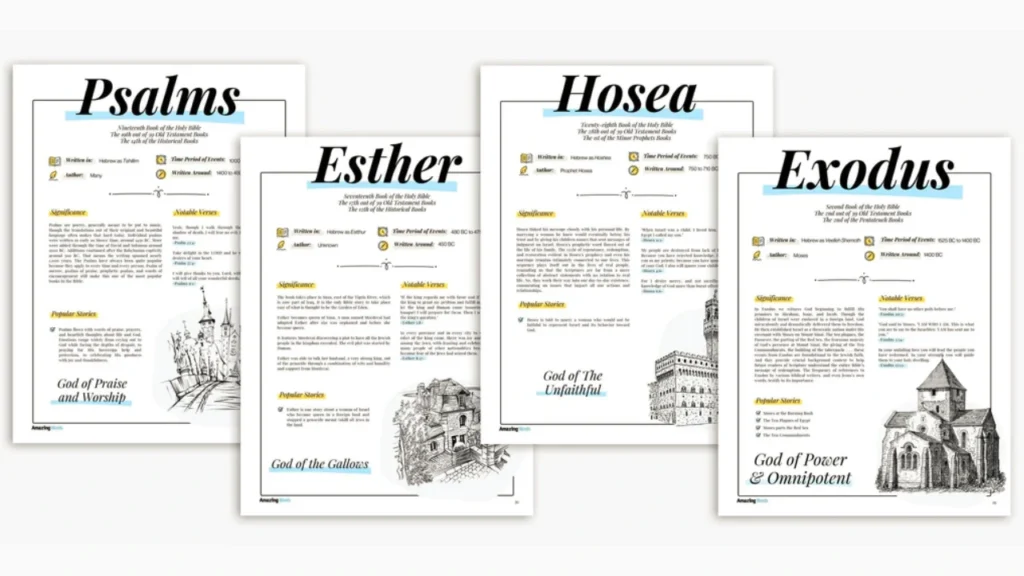
Understanding the Bible becomes easier when you know its basic structure. The Bible has two major sections called the Old Testament and the New Testament.
The Old Testament
The Old Testament explains how God created the world, chose Israel as His special people, gave His laws, and promised to send the Messiah. It introduces important people such as Adam, Noah, Abraham, Moses, Joshua, David, Solomon, Elijah, Isaiah, and many prophets. These books also contain songs, prayers, wisdom, and prophecies that prepared people for the coming of Jesus.
The New Testament
The New Testament begins with the birth of Jesus Christ. It tells His teachings, miracles, death on the cross, resurrection, and ascension into heaven. It also explains how the early church spread the gospel throughout the world. The letters written by the apostles teach Christians how to live faithfully, while Revelation gives hope about God’s final victory over evil.
The Main Story of the Bible
The easiest way to understand the Bible made simple concept is to remember that the entire Bible follows one storyline.
- First, God created the heavens, the earth, and everything in them. He created people to enjoy a perfect relationship with Him.
- Next, sin entered the world when Adam and Eve disobeyed God. Because of sin, suffering, death, and separation from God became part of human life.
- God did not leave humanity without hope. Throughout the Old Testament, He prepared a rescue plan by making promises through His prophets.
- Jesus Christ fulfilled those promises by living a perfect life, dying for humanity’s sins, and rising from the dead. Through faith in Him, people receive forgiveness and eternal life.
Finally, the Bible ends with God’s promise that He will restore creation and live forever with His people.
The Main Message of Every Part of the Bible
The following table summarizes the major sections of Scripture.
| Section | Main Message |
|---|---|
| Genesis | God created everything. |
| Exodus | God rescued His people. |
| Historical Books | Israel’s history and God’s faithfulness. |
| Wisdom Books | Practical wisdom and worship. |
| Prophets | Warnings, hope, and the coming Messiah. |
| Gospels | Life and ministry of Jesus Christ. |
| Acts | Growth of the early church. |
| Epistles | Christian teaching and encouragement. |
| Revelation | God’s final victory and eternal kingdom. |
Why Reading the Bible Is Important?
Many people read the Bible because it offers wisdom, hope, comfort, and direction. It answers life’s biggest questions about God, purpose, forgiveness, love, and eternity. The Bible also teaches values that improve relationships, encourage kindness, strengthen families, and build character. Its lessons remain relevant because human nature has not changed. Reading Scripture regularly helps believers understand God’s promises and apply His truth in daily life.
How Beginners Should Read the Bible?
Many first-time readers begin in Genesis and stop because they become confused. A better approach is to start with the life of Jesus. The Gospel of John clearly explains who Jesus is and why He came into the world. After John, many readers continue with Mark because it presents Jesus’ ministry in simple language. The Book of Acts shows how Christianity spread after Jesus returned to heaven. Psalms provides prayers and encouragement during difficult times, while Proverbs teaches practical wisdom for everyday decisions.
| Week | Book | Purpose |
|---|---|---|
| Week 1 | John | Learn about Jesus |
| Week 2 | Mark | Understand Jesus’ ministry |
| Week 3 | Acts | Discover the early church |
| Week 4 | Psalms | Find comfort and worship |
| Week 5 | Proverbs | Gain daily wisdom |
Key Themes Found Throughout the Bible
Several important themes appear from beginning to end. Understanding these themes makes the Bible made simple for readers of every age.
- God’s Love appears throughout Scripture as God continually reaches out to humanity despite human failure.
- Faith teaches believers to trust God even when they cannot see the outcome.
- Grace reminds readers that salvation is God’s gift and cannot be earned through good works.
- Forgiveness demonstrates God’s willingness to forgive those who sincerely repent.
- Hope encourages believers to look forward to God’s promises and eternal life.
These themes connect every book of the Bible into one unified message.
Who Wrote the Bible?
God inspired many writers to record His message. These writers came from different backgrounds and professions. Some were kings, such as David and Solomon. Others were shepherds, fishermen, prophets, doctors, tax collectors, and religious leaders. Despite their different lives, their writings fit together with remarkable unity because Christians believe God guided them through the Holy Spirit.
How the Bible Changes Everyday Life?
The Bible continues to influence millions of people around the world because its teachings speak to everyday challenges. It encourages honesty, patience, forgiveness, generosity, humility, and love. People often turn to Scripture during difficult times because it offers peace, comfort, and hope. Its teachings help families build stronger relationships and encourage individuals to make wise choices. Many readers find that spending time with God’s Word each day strengthens their faith and gives them confidence to face life’s challenges.
Why the Bible Still Matters Today?
Although the Bible was written thousands of years ago, its message remains relevant today. Human emotions, struggles, and questions have not changed. People still search for hope, purpose, forgiveness, and peace. The Bible answers these questions by pointing readers toward God’s love and His plan through Jesus Christ. Modern technology has made Scripture available in hundreds of languages, allowing people around the world to study it more easily than ever before.
Conclusion
The Bible made simple method helps readers understand one of the world’s most influential books without feeling overwhelmed. The Bible tells one powerful story of creation, sin, redemption, and eternal hope through Jesus Christ. Its 66 books work together to reveal God’s character, His promises, and His desire to have a relationship with humanity. By starting with the life of Jesus, reading consistently, and focusing on the Bible’s central message, anyone can understand Scripture more clearly. As you continue reading, you will discover timeless wisdom, lasting hope, and practical guidance that remains meaningful in every generation.